When I was eight years old, I got lost on a golf course in pea-soup winter fog. In those days, a child could leave the house without her parents even knowing that she was gone. It was one of many perilous events in my young life due to parental inattention, but this essay isn’t about mother blaming. The reason I was walking out there early on a frigid Saturday morning was to get to the stables to take care of our horse–grooming, stall cleaning, carrot feeding–since it had been sometime since anyone in my family had been there and I was wracked with guilt. In Carlisle Barracks in 1968, the horse stables and paddock were smack in the middle of a golf course fairway. I had traveled the two-mile route many times before, but never in the fog, and especially not in three feet of snow. Being cold and impatient, I took a shortcut, leaving the road and cutting across the fairway, thinking I could reach the stables from memory or habit. But the fog and snow made the world around me a blank sheet, erasing all the normal milestones, and I walked for what felt like hours toward a road that I knew had to be there, but never seemed to appear. I had been trudging along for much longer than it usually took to get to the stables, and I began to worry that I had been walking in circles, or that I had already bypassed the stables entirely and had entered the farmland on the other side of the gold course. The realization that I might soon freeze to death, my body only to be found during the spring thaw, made me drop to my knees and pray to God. I can’t remember, almost a half century later, the words I used, but whatever they were, they seemed to do the trick, because not ten seconds later, the sound of a passing car a little ways in front of me brought me to the road I had been looking for and I made it to the stables cold and in shock, but at least not dead.
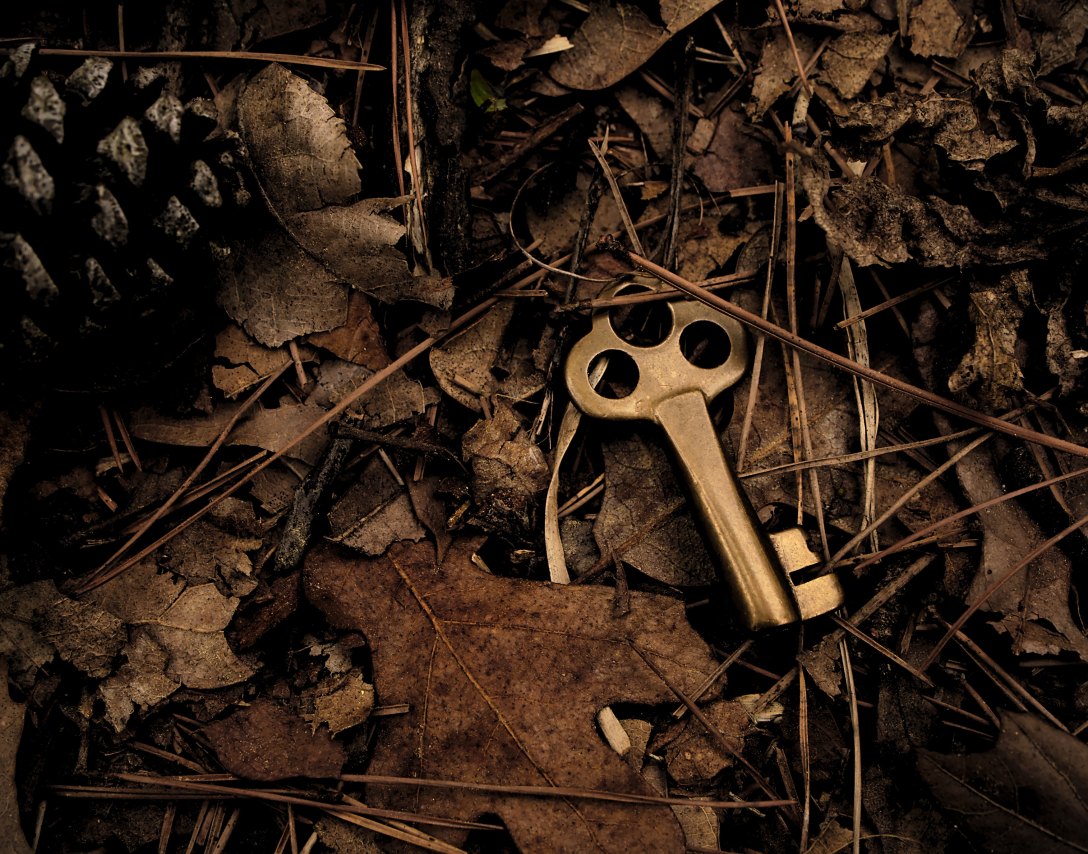
For many years after that, I tried praying every time I got lost or lost some important item, such as keys or my purse, but it never worked again. If I lost my way on the road, before there was GPS, I had to stop and ask someone for help. Whether or not I found a lost object was determined by pure chance most of the time. But so many things have stayed lost—socks, credit cards, cash, remote controls—sucked into that black hole that must by now be full of everyone’s lost things.
I suppose I could have tried praying to Saint Anthony, who is the Catholic patron saint for the recovery of lost items. The Church claims he is responsible for many miracles involving lost people and lost things. I doubt that would work, though, since I’m not Catholic and I’d feel hypocritical using him just to find lost stuff and not caring about his religious contributions.
An alternative, heathen practice for finding lost things is a form of dowsing using a pendulum. It’s supposed to work by helping you tap into, variously, your intuition, sixth sense, the collective consciousness, spiritual guides, guardian angels, or, as Albert Einstein himself believed, electromagnetism, in a way similar to birds’ migration following the earth’s magnetic field. Apparently, though, it’s very hard to dowse for lost objects, so people who are good at it are in high demand and can make a lucrative career out of it.
Recently, however, I gradually became aware of a new method for finding things. It seemed absurd at first, but has worked so often that I now rely on it. I call it the Law of Lost Things, since, like a physical law, it seems to work every time certain conditions are met. Indeed, over the last two years I’ve tested and verified it, even though the actual mechanism is invisible and therefore impossible to prove using the scientific method. It is a preternatural law, but weirdly—it just works.
So the Law is, whenever I lose something, all I have to do to find it is to buy a new one and the lost item reappears within at least minutes, or no more than a few hours, as if by magic. It is proved in my household by a long list of lost and found items, ranging from every pair of sunglasses I have ever owned to the small, easy-to-lose, yet expensive Apple TV remote control. But the most revealing example is what happened with my talented black Labrador, Dexter, who regularly picks up his food bowl and carries it around when he’s hungry to notify me that it’s breakfast or dinner time. One day he set it down somewhere, and when it came time to feed him, I couldn’t find it. I looked for it in vain in all the usual places—the kitchen, the dining room, the living room, the backyard, the bathroom. For weeks, I fed him using regular bowls as I continued to search, but at last I gave up and went to Petco to buy a new one.
As soon as I got home and opened the door, the bag with the new bowl still dangling from my hand, my eyes went straight to a table next to the door on top of which sat the old dog bowl, in embarrassingly plain sight. And for purposes of replication, a few days later the same thing happened with my other dog’s bowl, only this time, after I bought a new one, I found the old one in the backyard in a spot I had looked at before without seeing it.
But why does the Law actually work? What is it about buying a replacement item that allows us to find the original? Is the purchase of the new item a kind of sacrifice of money that propitiates some sadistic god of the lost? Could it be that it accesses some secret dimension, a brain state that allows the mind to remember where you put something, in the same way that dowsing accesses a sixth sense, your subconscious knowledge of where the lost object actually is?
If you don’t care to utilize the Law, there are many alternatives. You can search for a million years until you find the lost thing, if ever, or you can pray to God or Saint Anthony, and possibly receive an answer, or you can get a dowsing pendulum or rod, and likely fail. But because we are a materialist society and spend money constantly, the most fitting and therapeutic way is to try the Law of Lost Things.
Photo on main page by Michael Dziedzic on Unsplash.
 Lost in Thought