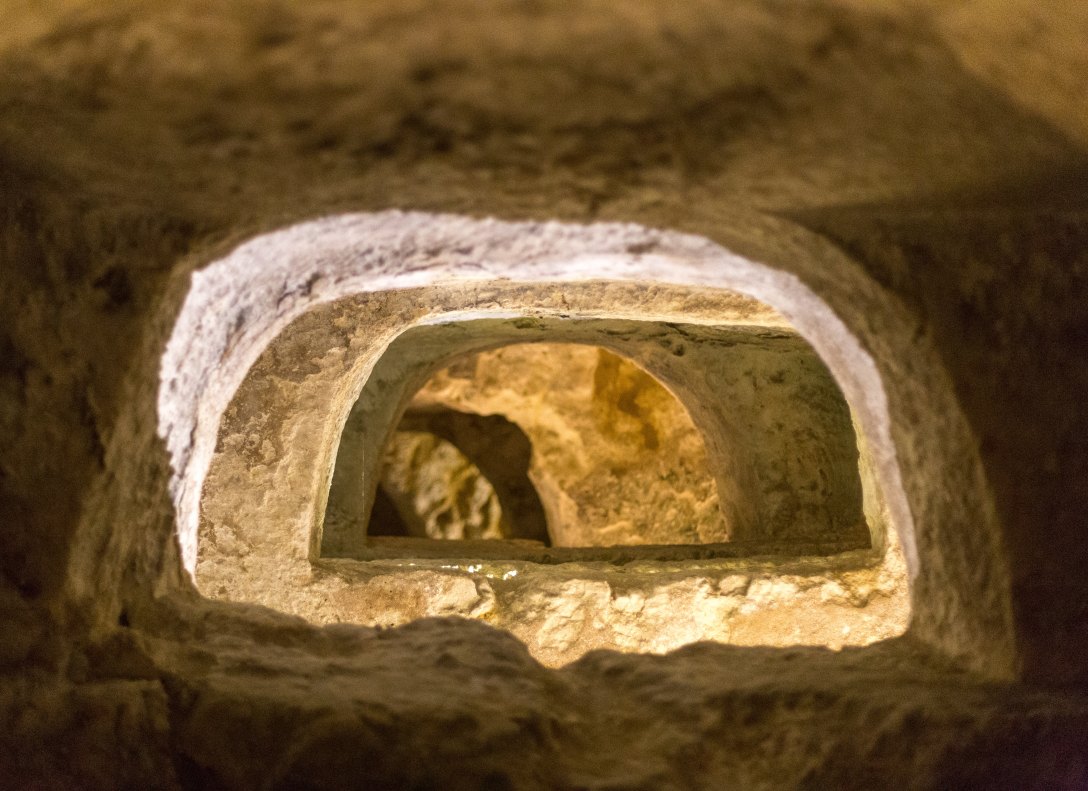
In the Tower of London, among the several dungeons that were used to hold and torture prisoners in the 16th and 17th centuries, was a small chamber hewn out of solid rock. This notorious cell, called Little Ease, was so small, measuring about four square feet, that it reportedly prevented prisoners from finding a comfortable position. They couldn’t stand up or straighten their legs, either by lying or sitting. Men might be thrown into Little Ease for several days to be softened up for torture and interrogation, or some, such as its most famous occupant, Guy Fawkes, who plotted to blow up Parliament in 1605, spent several months in the dark and cramped hole before being executed.
I haven’t thought about Little Ease since high school, where I learned about it while writing a history report on medieval torture (I admit, I was a pretty weird teenager). But I was recently reminded of that dungeon during a six-hour flight from Philly to Seattle. Now I’m not saying that my flight in coach was worse than anyone else’s. Everyone has horror stories, and, in retrospect, my experience was typical, but at the time, I honestly thought I’d never been so miserable in my life. In fact, though, others around me had it much worse. I actually felt sorry for the two passengers who were involuntarily torturing me. I was in a window seat, which I had chosen, unlike the giant man sitting next to me, who was a North Slope oil pipeline worker. He probably had not chosen to be assigned to the middle seat. Way over six feet tall, his muscular upper body was so wide that my effort to preserve our respective personal space prevented me from being able to sit up straight for six hours.
In front of me was a woman who reclined her seat for the entire flight, an act I consider to be one of the rudest things a passenger can do during the daytime. On the bright side, my feet became adept at grasping things and lifting them up to my hands, since I could not bend down without hitting my head on her seat back. I have to cut her some slack, though, since she had a young baby with healthy lungs who cried for a solid hour at the beginning of the flight and periodically thereafter.
I’ve been there, I understand.
Once I got to stand up and stumble around on stiff legs like a newborn giraffe, I began to wonder why on earth everyone accepts this kind of torture, as if the laws of the universe dictate that unless you’re rich and can afford first class, you must be crushed while flying. Most coach seats measure about seventeen to nineteen inches across, and the pitch of a seat, the distance from seat back to seat back, can range anywhere between twenty-eight and thirty-six inches. So, in the roomiest seats, you get to pay to sit for hour upon hour in a foot-and-a-half by three-foot space, about the same size as the Little Ease.
The seventeen-inch seat width originated about fifty years ago and was based on the width of the hips of a male U.S. Air Force pilot. Airlines eventually realized that that wasn’t enough room, and seats over the following decades slowly increased in size—until recently. Nowadays, airlines are installing slimline, less padded chairs, and every available inch in the cabin is being given over to extra rows of coach seats and additional, more luxurious premium seating. Obviously, airlines can’t afford to give all passengers as much space as first class, but why torture us with such cramped conditions, when everyone knows that Americans are bigger now than they were in the 1960s?
My first assumption was that profit-hungry airlines don’t care if their passengers can’t move around enough to avoid deep vein thrombosis, so long as they can fit more paying bodies into the cabin. But as much as everybody complains about uncomfortable flying, it turns out that, according to various travel society surveys, people would rather have lower fares than more comfortable seats, and airlines are just giving them what they want.
Apparently, as with everything else, we fly in a Little Ease of our own making.
Photo by Karim MANJRA on Unsplash
 Lost in Thought